Process and Analytical Development for Cell & Gene Therapies

Your vision + our expertise. A partnership built on trust and data you can defend.
Let’s Turn Your Cell or Gene Therapy into Reality
Our scientists bring decades of hands-on viral vector experience to your program. With every program, we pair process development and analytical science expertise with flexibility to solve your toughest challenges.
Whether you are advancing a novel AAV, lentivirus, adenovirus or other vector-based therapy or transferring an established process, our integrated approach is built around one goal: getting your therapy to patients efficiently and safely.
Platform Approach
Our platform foundation provides a launching point, rather than forcing your program into a rigid template. This allows us to apply our expertise to de-risk and shorten development timelines, while leaving room to adapt when your program calls for something different.
Custom Development
Every vector, every indication, and every program has different requirements, and we know a platform approach doesn’t always fit the science. Our development scientists work closely with your team to design custom process and analytical strategies when your program requires a more tailored approach.
Tech Transfer
A successful tech transfer protects the time, money, and scientific effort already invested in your program. Our tech transfer teams follow structured, well-documented protocols to move your process and methods into our facility with minimal disruptions, so you can move forward with confidence, rather than starting from scratch.
Process Development
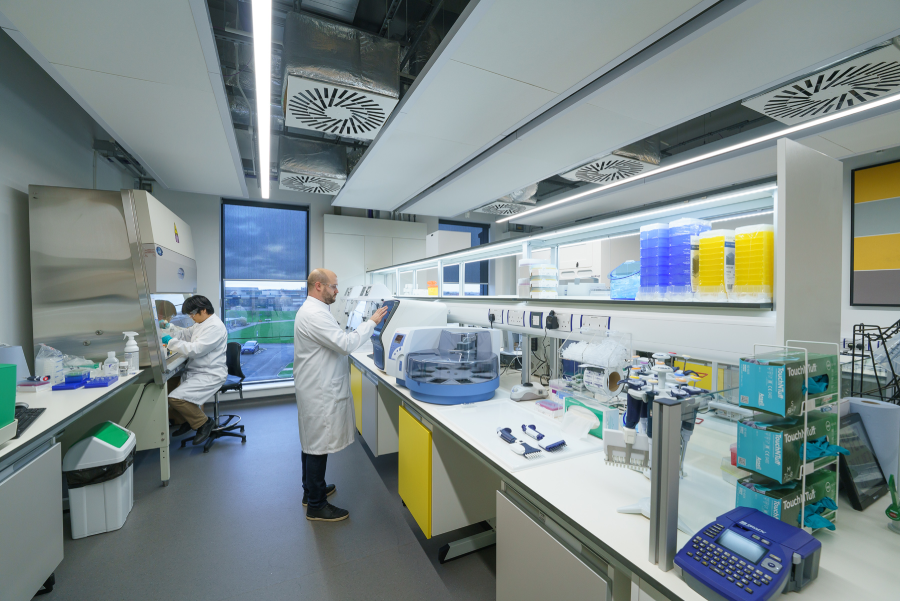
- GMP-compliant master and working cell bank generation
- Adherent to suspension process development
- Upstream & downstream development
- Bench to pilot scale – 250 mL to 500 L
- Process characterization and optimization
- Scale-up and scale-down modeling
- Process robustness and comparability studies
Analytical Development
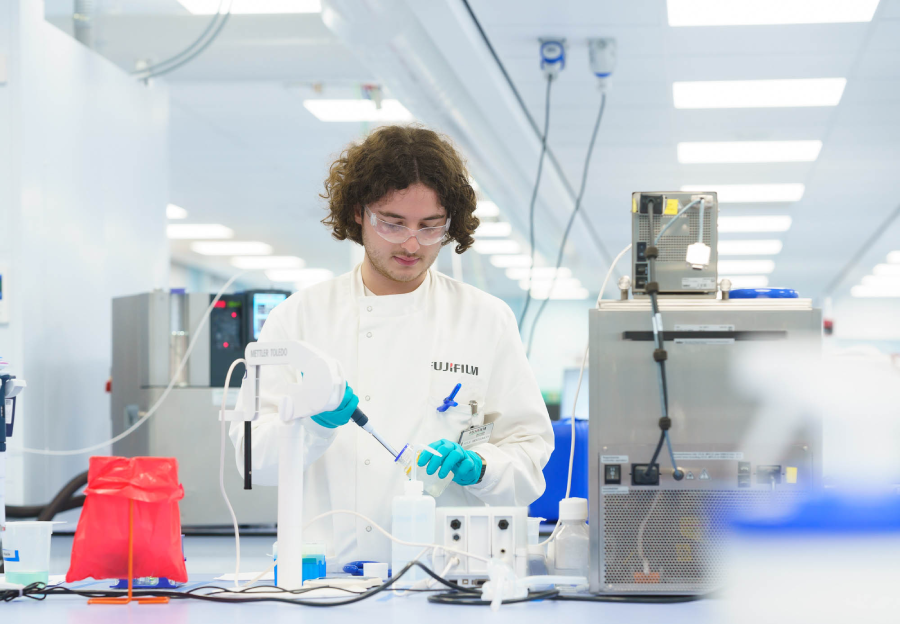
- Phase-appropriate solutions
- Product specific assay development
- Method optimization and validation
- Characterization assays
- Comparability studies
- In-house NGS capabilities
Comprehensive Approach to Tech Transfers
Whether your process was developed in-house or at another CDMO, our dedicated tech transfer team is equipped to bring it into our facility collaboratively and transparently. Our goal is a transfer that preserves everything you have already learned about your process, while integrating it smoothly into a GMP-ready manufacturing environment.
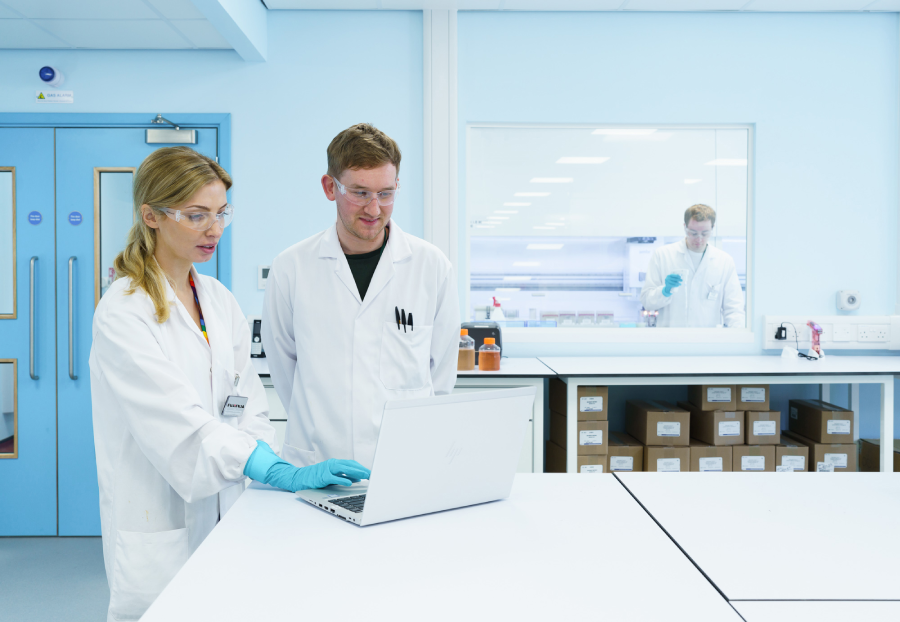
Existing Processes
- Knowledge transfer and gap analysis
- Risk assessment and transfer planning
- Confirmation runs
- Documentation alignment
- Knowledge transfer session
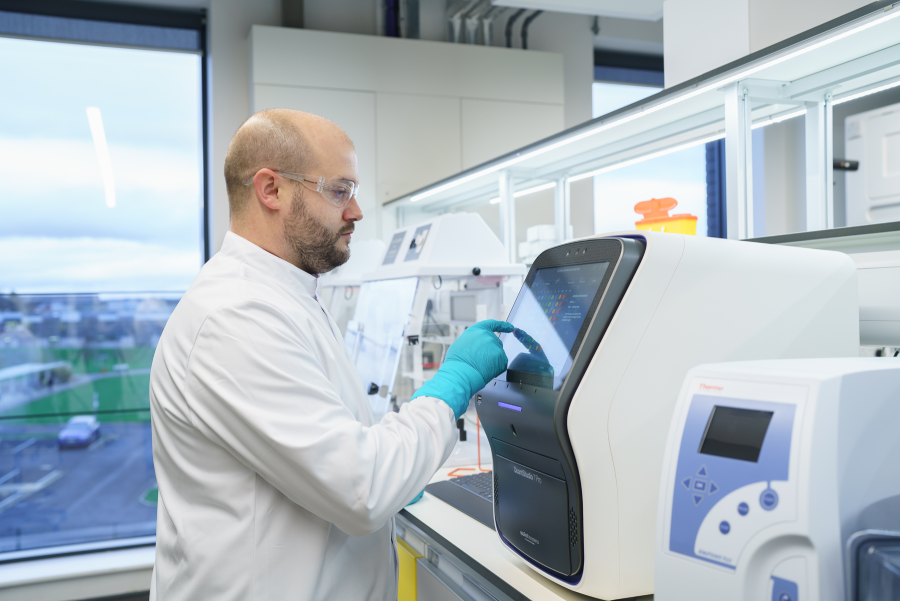
Existing Analytical Methods
- Method documentation review
- Transfer protocol design
- Co-validation testing
- Reference standard and critical agent qualification
- Bridging studies & method modifications
- Final transfer reporting
Get in touch with our viral vector experts.
FAQ: Viral Vector Production
Our team evaluates your viral vector and target product profile to determine the best strategy for your program. If your viral vector fits well into our platform approach, we will use that as a foundation to save development time and reduce risk. Alternately, our team will build a custom process or adapt platform elements to fit your molecule. Either way, the decision is data-driven and not one-size-fits-all.
As early as possible, and ideally in parallel. Analytical methods tell you whether your process is working as expected. Our analytical and process development teams work together from day one, so methods are ready to support process decisions as they happen.
Our goal is to make it as low risk as possible. We begin with a knowledge transfer and gap assessment of your existing process and then build a transfer protocol with aligned acceptance criteria before running any confirmation batches. Because we are comparing against your historical data, you will know quickly if the process is performing as expected.
In most cases, we can transfer your existing methods directly. Our team reviews your historical documentation and then runs co-validation or side-by-side testing to confirm the method performs equivalently in our labs. Because of instrumentation and reagent difference, a method might not transfer cleanly. In that case, we’ll work with you on a bridging study or method modification rather than starting from scratch.